


- By Admin
- December 29, 2025
- SEO
Why Traditional SEO Is Evolving into Search Experience Optimization
For many years, Search Engine Optimization (SEO) has been the backbone of digital visibility. Businesses focused on keywords, backlinks, and rankings to appear on the first page of search engines. While these factors still matter, the way people search – and the way search engines respond – has changed significantly.
Today, users expect fast answers, smooth experiences, and relevant results, not just keyword-stuffed pages. Search engines like Google are no longer ranking websites only based on technical SEO signals. They are now prioritizing user experience, content quality, intent, and engagement. This shift has given rise to a new concept – Search Experience Optimization (SXO).
At SM Tech, we believe that SEO is no longer just about being found. It is about being chosen, trusted, and remembered. This blog explains why traditional SEO is evolving into Search Experience Optimization and what it means for businesses in today’s digital world.
Understanding Traditional SEO
Traditional SEO focuses on optimizing websites to rank higher on search engine result pages. The main areas include:
- Keyword research and placement
- Meta titles and descriptions
- Backlinks and domain authority
- Technical SEO including site speed and indexing
- Content optimization for search engines

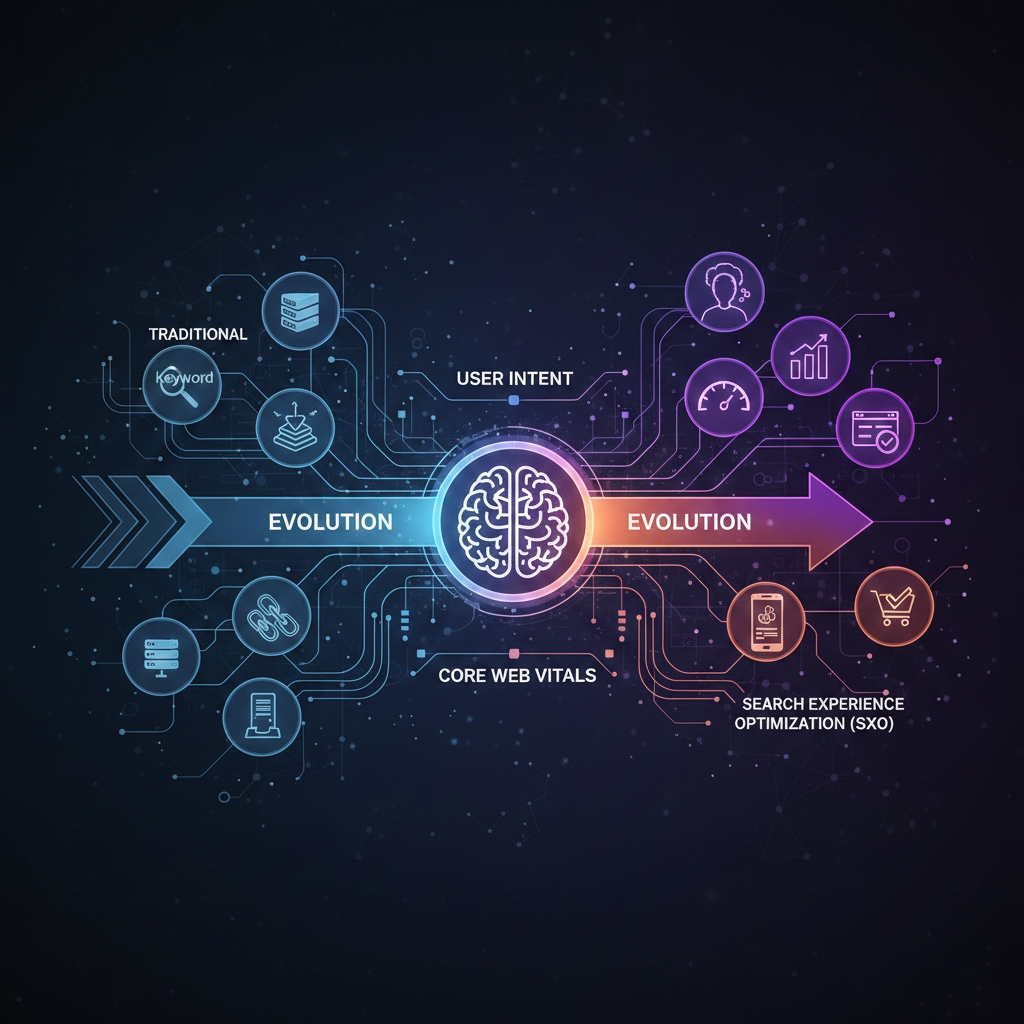
These practices helped businesses gain visibility and traffic. However, ranking high does not always mean success anymore.
Many websites still rank on page one but fail to convert visitors because the experience is poor, the content does not match intent, or the page is hard to navigate.
This gap between ranking and real results is where traditional SEO starts falling short.
How User Behavior Has Changed
Search behavior today is very different from what it was a few years ago.
Users now:
- Ask conversational and voice-based queries
- Expect instant and accurate answers
- Use multiple devices like mobiles, tablets, and voice assistants
- Leave websites quickly if pages load slowly or feel confusing
Search engines track these behaviors closely. Metrics like:
- Bounce rate
- Time spent on page
- Click-through rate
- Mobile usability
All signal whether a user is satisfied with the result or not.
If users click your website but leave immediately, search engines understand that the experience did not meet expectations – even if the keywords were relevant.
What Is Search Experience Optimization (SXO)?
Search Experience Optimization combines SEO, UX (User Experience), content strategy, and conversion optimization into one holistic approach.
SXO focuses on the complete journey:
- From search query
- To clicking a result
- To interacting with the website
- To taking meaningful action
The goal is not just traffic – it is value-driven engagement. At SM Tech, we define SXO as:
“Optimizing not just for search engines, but for real people behind every search.”
Why Search Engines Now Prioritize Experience
Search engines want to deliver the best possible answer, not just a relevant one.
Google’s algorithm updates increasingly focus on:
- Page experience
- Core Web Vitals
- Mobile-first indexing
- Helpful and people-first content
This means search engines reward websites that:
- Load fast
- Are easy to navigate
- Provide clear and trustworthy information
- Solving user problems efficiently
Traditional SEO alone cannot fulfil these expectations anymore.
Key Elements Driving the Shift to SXO
- 1. Search Intent Over Keywords
Earlier, SEO was about matching keywords. Now, it is about understanding why a user is searching.
For example:
- Are they looking for information?
- Do they want to compare options?
- Are they ready to buy or contact a service provider?
SXO ensures content is aligned with intent, not just search terms. SM Tech creates content strategies that map user intent at every stage of the customer journey.
- 2. Content Quality and Relevance
Search engines now evaluate:
- Content depth
- Clarity and structure
- Originality and usefulness
Thin, repetitive, or AI-generated content without value does not perform well.
SXO demands content that:
- Answers questions clearly
- Using simple language
- Builds trust and authority
This is why content marketing and SEO can no longer work in isolation.
- 3. Website Speed and Performance
No matter how good your content is, users will leave if your website is slow.
Page speed affects:
- Rankings
- User satisfaction
- Conversion rates
Search Experience Optimization focuses heavily on performance improvements, especially on mobile devices.
At SM Tech, we optimize websites to ensure fast loading times and smooth interactions across all platforms.
- 4. Mobile-First Experience
More than half of all searches happen on mobile devices. If your website:
- Is not mobile-friendly
- Has hard-to-read text
- Has broken layouts
Search engines will downgrade it.
SXO ensures responsive design, easy navigation, and touch-friendly interfaces.
- 5. Engagement and Behavior Signals
Search engines monitor how users interact with your site.
Positive signals include:
- Longer session durations
- Multiple page visits
- Form submissions or actions
Negative signals include:
- High bounce rates
- Low engagement
SXO focuses on keeping users engaged, not just attracting them.
The Role of UX and UI in SXO
User Interface (UI) and User Experience (UX) are no longer optional for SEO success.
A clean design, logical structure, and clear call-to-actions help users:
- Find information quickly
- Trust your brand
- Take the next step
At SM Tech, our UI/UX and SEO teams work together to create websites that are both search-friendly and user-friendly.
How SXO Impacts Business Growth
Search Experience Optimization delivers results beyond rankings.
Benefits include:
- Higher quality traffic
- Better lead conversions
- Improved brand credibility
- Lower bounce rates
- Long-term organic growth
Instead of chasing algorithm updates, SXO builds a future-proof digital presence.
Why Businesses Must Adapt Now
Search engines will continue evolving. AI-powered search, voice assistants, and generative answers are changing how results are displayed.
Businesses that rely only on traditional SEO risk:
- Losing visibility
- Decreased engagement
- Lower ROI
SXO ensures your brand stays relevant in this changing landscape. SM Tech helps businesses transition smoothly from keyword-focused SEO to experience-driven optimization strategies.
How SM Tech Approaches Search Experience Optimization
At SM Tech, we don’t treat SEO as a checklist. We treat it as a complete experience strategy.
Our SXO approach includes:
- Intent-based keyword research
- High-quality, human-focused content
- Technical SEO and performance optimization
- UX and UI improvements
- Continuous data analysis and refinement
This integrated method ensures that when users find your website, they stay, engage, and convert. Traditional SEO laid the foundation for online visibility, but it is no longer enough on its own. Search engines now care deeply about how users experience your website, not just whether you used the right keywords. Search Experience Optimization is the natural evolution of SEO – one that focuses on people, not just algorithms.
By embracing SXO, businesses can build stronger digital connections, improve conversions, and stay ahead in an increasingly competitive search landscape. If you are ready to move beyond rankings and create meaningful digital experiences, SM Tech is here to help you lead that change.



Leave a comments