


- By Admin
- 31 Dec, 2025
- Software Development
Low-Code & No-Code Platforms Are Rising – But Are Developers Really Becoming Obsolete?
The software development industry is changing rapidly. One of the most talked-about trends today is the rise of low-code and no-code platforms. These platforms allow users to build websites, applications, and digital workflows with very little coding or sometimes no coding at all.
For many businesses, this shift feels revolutionary. Digital products can be launched faster, costs can be controlled better, and even non-technical teams can contribute to building solutions. However, this also leads to an important question. If software can be created without much coding, are developers still needed?
At SM Tech, we work with businesses that are navigating this exact transition. Our experience shows that low-code and no-code platforms are not replacing developers. Instead, they are changing the way software is designed, built, and scaled.
Understanding Low-Code and No-Code Platforms
Low-code and n o-code platforms simplify the development process by offering visual tools instead of traditional coding-heavy methods. Users can create applications using drag-and-drop components, pre-built modules, and visual workflows.
In simple terms:
- Low-code platforms are used by developers to speed up development with minimal manual coding
- No-code platforms are designed for non-technical users who want to build basic applications independently
These platforms are commonly used for:
- Websites and landing pages
- Internal dashboards and admin panels
- Workflow automation and approvals
- CRM and data management tools

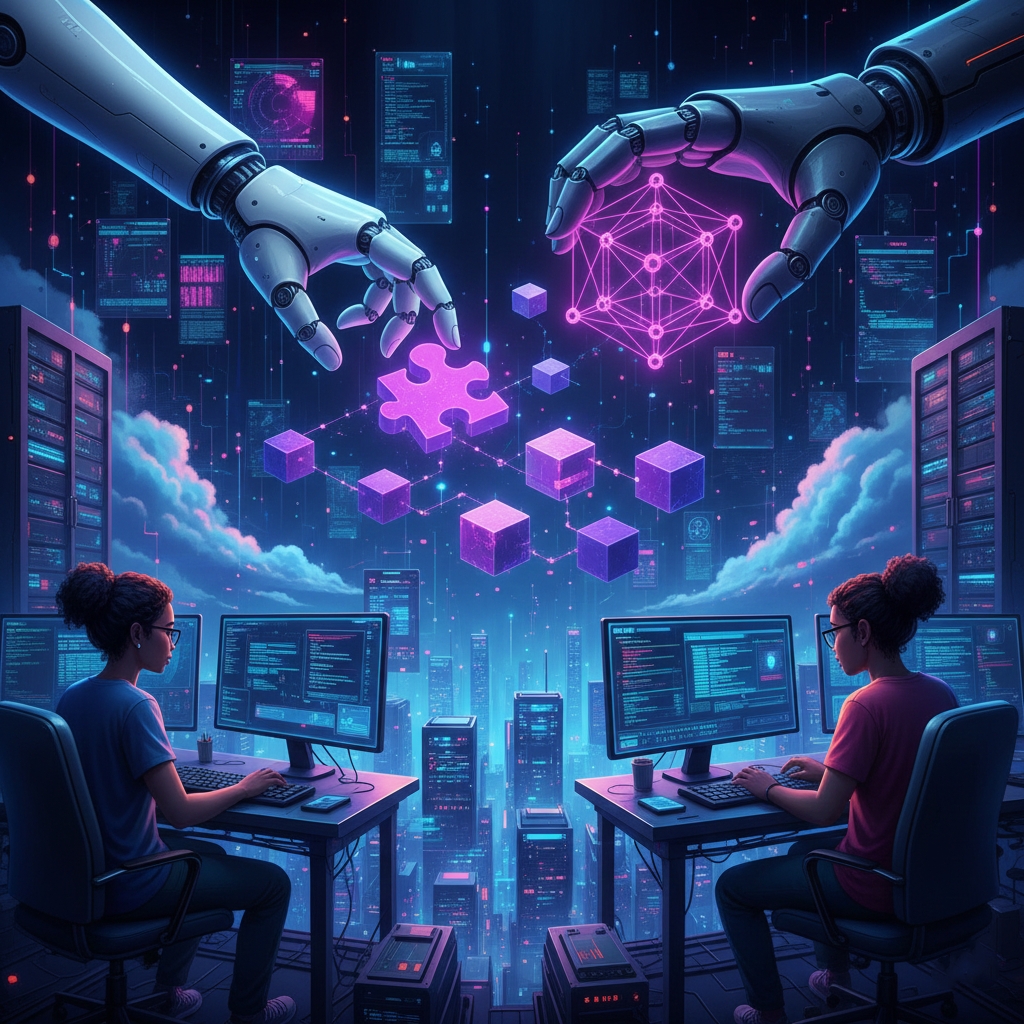
Why Low-Code and No-Code Platforms Are Growing So Fast
The rapid growth of low-code and no-code platforms is driven by real-world business challenges. Companies need to move fast, stay flexible, and reduce development bottlenecks.
Some key reasons behind their popularity include:
- Faster time to market for new ideas and products
- Lower initial development costs, especially for startups
- Shortage of skilled developers across the global market
- Increased demand for digital solutions in every department
Low-code tools also empower non-technical teams like HR, finance, and marketing to build tools that solve their own problems. This reduces dependency on IT teams and improves overall efficiency.
At SM Tech, we often see organizations using low-code platforms for internal systems, while relying on custom-built solutions for core business applications.
Are Developers Still Needed?
The short and honest answer is yes. Developers are still very much needed.
Low-code and no-code platforms are powerful, but they are not built for every situation. They work best for simple or moderately complex use cases. As business requirements grow, the need for skilled developers becomes unavoidable.
Developers are essential when it comes to:
- Designing complex business logic and workflows
- Building secure and compliant applications
- Managing large databases and system integrations
- Ensuring long-term performance and scalability
Without proper development expertise, applications can become difficult to maintain, slow, or insecure over time.
What Low-Code and No-Code Platforms Cannot Replace
While these platforms offer convenience, they also come with limitations. Certain areas of software development still require deep technical knowledge.
For example:
- Advanced system architecture cannot be fully handled by visual tools
- Security and compliance require custom controls, especially in industries like healthcare, fintech, and e-commerce
- Scalability becomes a challenge when applications grow beyond a certain size
- Custom integrations with legacy systems or third-party APIs often need manual coding
At SM Tech, we often combine low-code tools with traditional development to ensure reliability, flexibility, and future readiness.
How the Role of Developers Is Evolving
Low-code and no-code platforms are not ending developer careers. Instead, they are redefining the role of developers.
Modern developers now focus more on:
- System and solution architecture
- Backend logic and API development
- Cloud infrastructure and deployment
- AI, automation, and data-driven features
- Performance optimisation and user experience
Low-code tools help reduce repetitive work, allowing developers to concentrate on innovation and problem-solving.
At SM Tech, our development teams use these platforms as accelerators, not shortcuts.
The Power of a Hybrid Development Approach
The most successful digital solutions today follow a hybrid development approach. This means combining the speed of low-code platforms with the strength of custom development.
This approach offers:
- Faster development without compromising quality
- Easier scalability as business needs grow
- Long-term flexibility and ownership of technology
Rather than choosing between low-code and traditional development, businesses benefit most by using both wisely.
How SM Tech Helps Businesses Adapt
At SM Tech, we help businesses choose the right development strategy based on their goals, budget, and future plans. We do not push a single tool or platform. Instead, we focus on what works best for the business.
Our services include:
- Custom software and application development
- Low-code and no-code solution consulting
- AI-powered and automation-driven platforms
- Cloud-based and scalable digital solutions
Whether you are building a quick internal tool or a complex enterprise system, our team ensures your solution is secure, scalable, and built to last.
Low-code and no-code platforms are reshaping the software development landscape. They make technology more accessible and help businesses move faster. However, they do not remove the need for developers.
Developers remain critical for building reliable, secure, and scalable systems. The future of development lies in collaboration between smart tools and skilled professionals.
Businesses that succeed will be those that use low-code platforms strategically, invest in strong development expertise, and partner with experienced technology providers like SM Tech.
Technology is evolving, and developers are evolving with it.



Leave a comments